

Back-to-school season means one thing for furniture buyers: high population mobility, short usage cycles, and strong repeat demand. Every year, a fresh wave of students and renters moves into dorms and shared apartments—and every year, they need the same essentials again. Still deciding what to stock for this season’s move-in rush? A portable canvas wardrobe solves the exact problem this audience faces: the need for real clothing storage without the cost, weight, or commitment of a traditional wardrobe they can’t take with them when the lease ends.
In these situations, a large solid-wood or conventional cabinet wardrobe can become more of a burden than an asset. It takes up valuable floor space, requires a larger upfront investment, and may be difficult or expensive to move. The real question is therefore not simply which wardrobe offers the most storage, but which wardrobe can meet daily storage needs without creating a long-term furniture commitment.
As the back-to-school season approaches, retailers and buyers are preparing for a surge in demand from students, renters, and other consumers entering temporary or changing living arrangements. For this market, flexibility and convenience are not just product features—they are key drivers of broader sales opportunities and repeat replenishment. Canvas and fabric wardrobes can serve a wide range of scenarios, from student accommodation and shared apartments to short-term rentals and seasonal storage, allowing retailers to reach multiple consumer groups rather than relying on a single seasonal demand cycle. Their flexible positioning also makes them well suited to recurring purchasing opportunities around back-to-school, moving, and seasonal storage periods, giving buyers a practical category with both seasonal sales potential and ongoing replenishment demand.
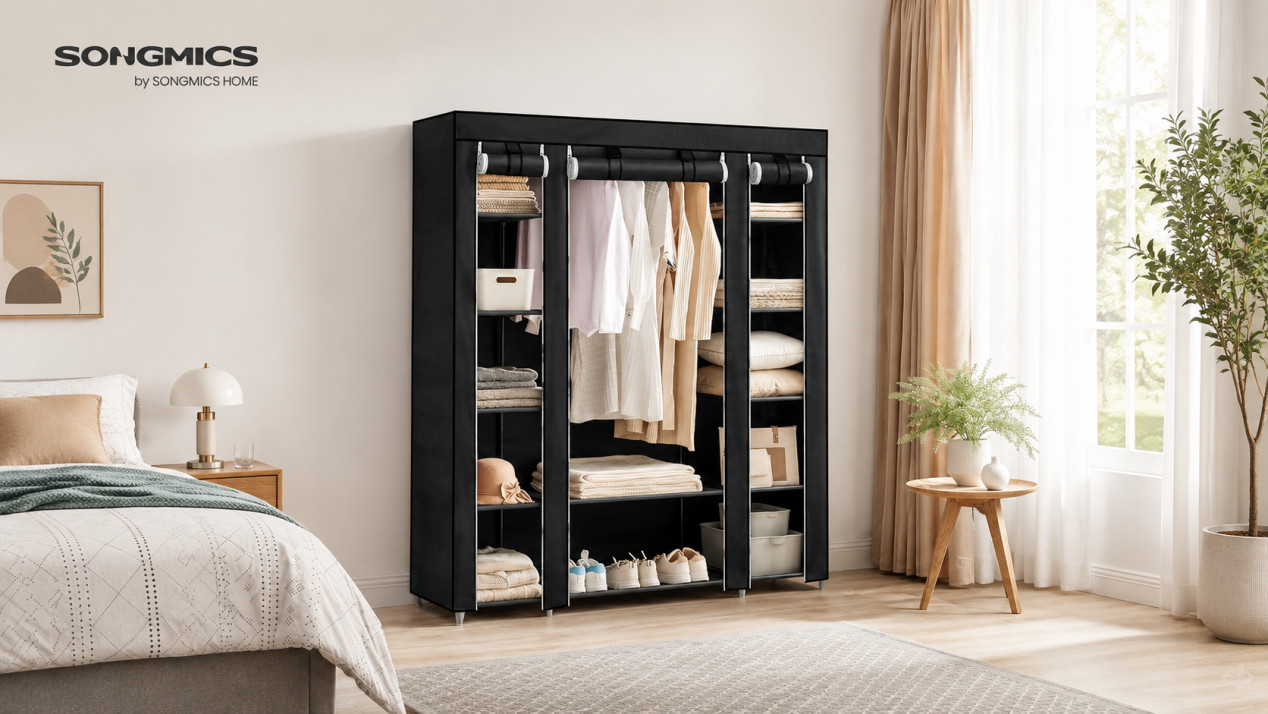
Why Temporary Living Needs a Different Kind of Wardrobe
Furniture Should Match the Length of the Stay
Traditional wardrobes are designed for long-term homes. Their weight, construction, and price make sense when they remain in one place for years.
Temporary housing works differently. Students and renters still need space for coats, shirts, shoes, bags, and folded clothing, but they may only need that setup for a semester or a one-year lease. Heavy furniture becomes less practical when the next room may have different dimensions or already include basic furnishings.
A portable fabric wardrobe provides dedicated clothing storage without requiring users to treat it as a permanent part of the property.
This is especially relevant in European rental markets. In 2024, 32% of people in the EU lived in rented housing, while in Germany renters represented 53% of the population.[1] Rental-friendly furniture therefore serves a much broader audience than students alone.
Ease of Relocation Matters as Much as Storage
Moving a traditional wardrobe often means partial disassembly, transportation, and reassembly. For temporary residents, the cost and effort may outweigh the value of keeping it.
Fabric wardrobes use a different structure. Metal tubes, plastic connectors, fabric shelves, and flexible covers can be separated into smaller components, making the wardrobe easier to move or store when it is no longer needed.
This flexibility is useful for dormitories, shared apartments, guest rooms, and other spaces where storage needs may change within months rather than years.
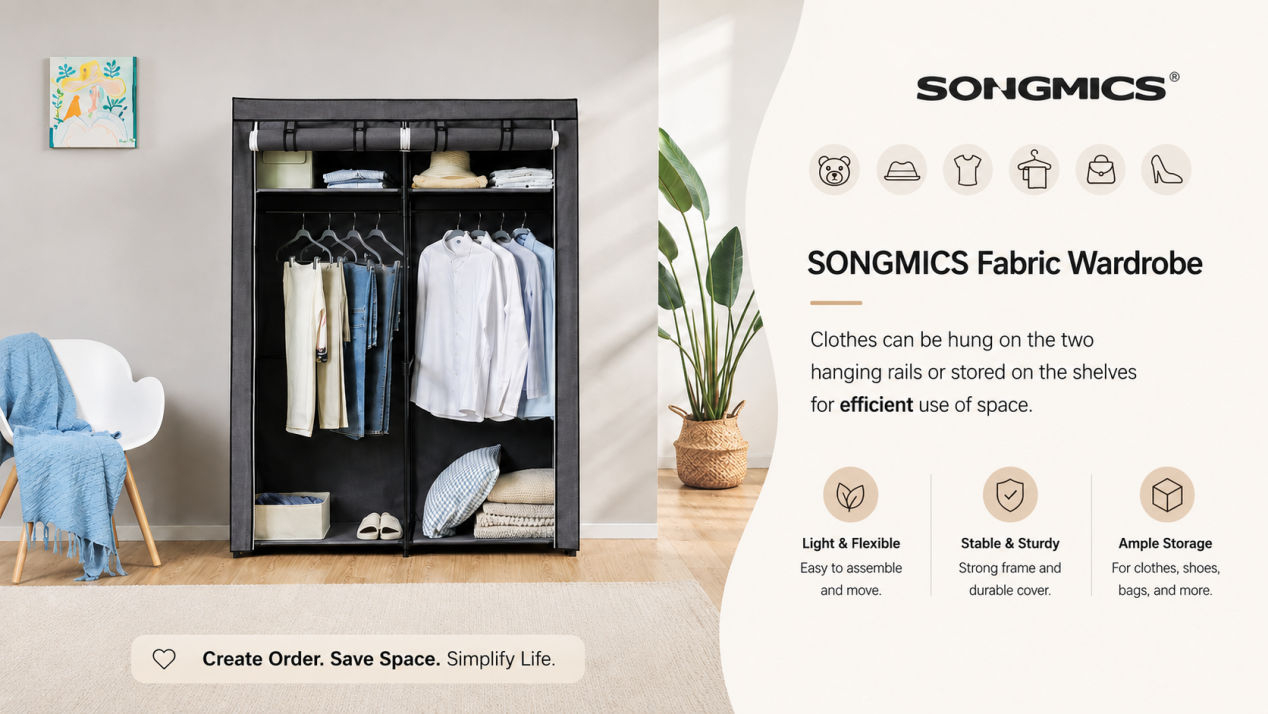
Key Features of a Canvas/Fabric Wardrobe
The value of this category becomes clearer when its design is viewed through temporary-living needs rather than price alone.
Dust Protection Without Permanent Cabinetry
The SONGMICS RYG02GY uses a non-woven fabric cover with a zipper and hook-and-loop fasteners. When closed, it helps protect clothing from everyday dust while keeping the room visually organized.
For buyers comparing temporary-storage solutions, SONGMICS HOME’s fabric wardrobes sit between an open clothes rail and a traditional enclosed wardrobe: they provide covered storage while remaining portable and lightweight.
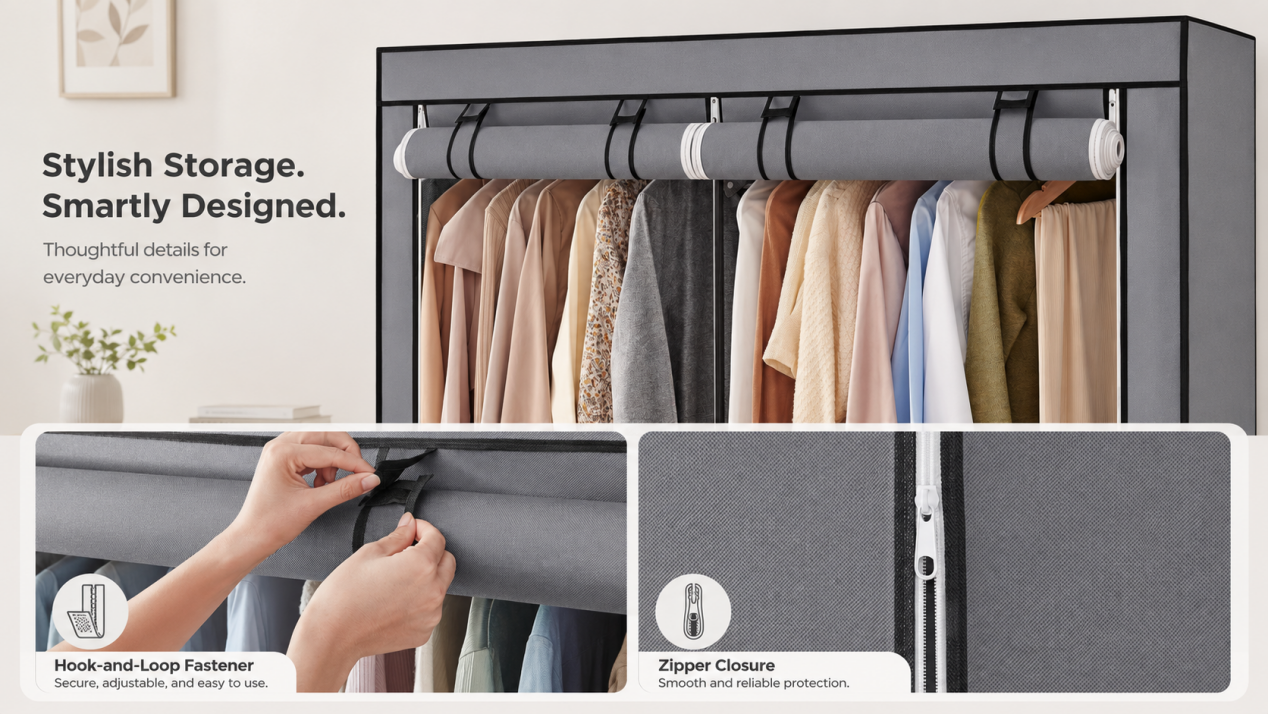
Hanging and Folded Storage in One Structure
The RYG02GY measures 140 × 43 × 174 cm and includes two hanging rails. Each rail has a stated static load capacity of up to 30 kg, while two adjustable fabric shelves support up to 10 kg each.
For consumers who prefer more compartmentalized storage, the portable fabric wardrobe with 12 compartments measures 150 × 45 × 175 cm and combines one hanging section with 12 shelves. Its hanging rail supports up to 15 kg, while each shelf supports up to 5 kg.
For retailers, these layouts address two different needs:
- A dual-rail model suits consumers who hang more shirts, jackets, or dresses.
- A multi-compartment model suits consumers who separate folded clothing, shoes, bags, and accessories.
Tool-Free Assembly Supports Frequent Moves
The RYG02GY is assembled by inserting metal tubes into plastic connectors, with no tools required.
For students arriving in a new dormitory or renters moving into an apartment, this means the wardrobe can be set up immediately without professional installation. When the lease ends, the structure can also be dismantled again.
This simple assembly model supports the key value of the category: storage that can adapt to a changing address.
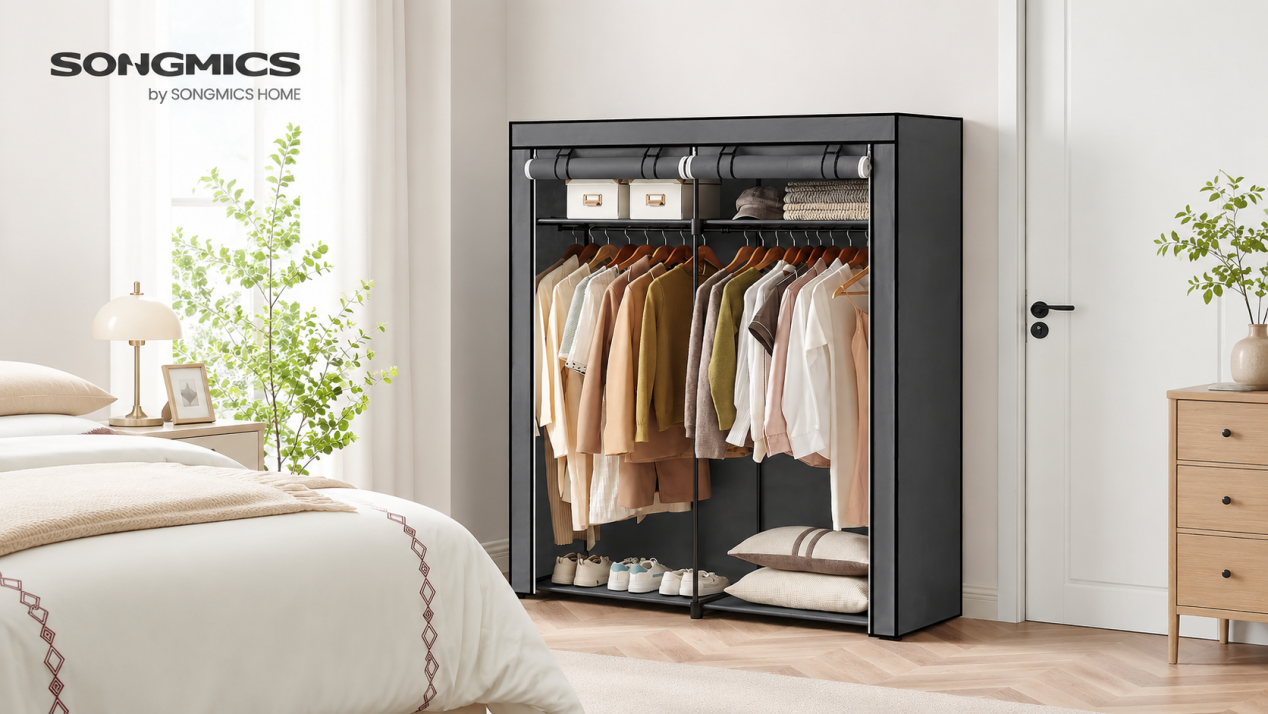
Who Benefits Most from a Canvas Wardrobe
Students and Shared-Housing Renters
Students and shared-housing renters are natural users because private space is often limited and occupancy periods are short.
A student may need a full-size wardrobe during the academic year but may not want to buy furniture that has to be sold, discarded, or left behind when moving out. A portable wardrobe can instead move with the user.
For retailers, this makes the category particularly relevant during university move-in and back-to-school periods, when a new group of consumers enters the market every year.
Seasonal and Temporary Storage Users
Fabric wardrobes can also work as secondary storage.
Households may need extra space for winter coats, guest-room clothing, luggage, or seasonal garments without wanting permanent cabinetry. A dismantlable wardrobe can be used when needed and stored again when demand decreases.
This gives retailers a broader selling window beyond the back-to-school season.
Young Renters Seeking Better Value
Affordability remains important, but price should not be the only selling point.
For young renters, the stronger value is avoiding a large investment in furniture for a temporary property. Lower purchase commitment, tool-free setup, easy dismantling, and portability all contribute to better value over a short rental period.
What This Means for B2B Furniture Buyers
For wholesalers, distributors, online retailers, and home-furnishing buyers, the same lightweight structure also creates supply-chain advantages.
Fabric wardrobes mainly consist of metal tubes, connectors, fabric shelves, and a flexible outer cover, allowing the components to fit into relatively compact cartons. For example, SONGMICS HOME lists the RYG02GY with a package size of 69 × 37 × 12.5 cm, a gross weight of 6.4 kg, and a package volume of approximately 0.032 m³.
Because the fabric cover and shelves can be folded and the frame can be separated into tubes and connectors, the product can be packed down efficiently. This can improve container utilization and warehouse density while helping reduce freight cost per unit compared with bulky assembled furniture.
Compared with bulky assembled furniture, this format can improve carton handling, warehouse utilization, parcel fulfillment, and international inventory planning. It is particularly suitable for overseas warehouses where buyers need to hold more units within limited space and replenish quickly during back-to-school, rental turnover, and moving seasons.
For B2B buyers, the category therefore offers more than a low-priced wardrobe. Its commercial value comes from a combination of:
- A clear target market: students, renters, small-space users, and temporary-storage buyers.
- Efficient packaging and logistics: lightweight components and compact cartons.
- Recurring demand: new students, renters, movers, and seasonal-storage users continuously enter the market.
As rental and mobile living remain important parts of the European housing market, portable fabric wardrobes can be positioned as a stable small-space storage category rather than only a seasonal promotion.
For furniture buyers, the strongest value is the combination of user friendly movability for the consumer and logistics efficiency for the supplier—a product that is easy to assemble, easy to move, easy to store, and efficient to distribute. Buyers reviewing a wider home-furnishing assortment can explore SONGMICS HOME B2B for the brand’s broader portfolio.
For wholesale inquiries, assortment planning, or distribution discussions, Contact SONGMICS HOME.
References
[1] Eurostat, Housing in Europe – 2025 Edition. 2024 data: 32% of the EU population lived in rented housing; Germany had a 53% tenant share.


